Nobody Saw the Chicago White Sox Coming. They Might Not Care.
Three years ago, the Chicago White Sox lost 121 games. That was a modern Major League Baseball record. Two years ago, they lost 102. Last year, they lost 102 again. In three consecutive seasons, this franchise lost more games than almost any team in the history of the sport.
Right now, they lead the American League Central.
Let that settle for a moment.
As a Guardians fan, I’ll be honest with you. I don’t love writing this. But I’d be doing a disservice to anyone who follows baseball if I didn’t acknowledge what the White Sox are doing this season, because what they’re doing is genuinely remarkable. They’re 47-42, they just split a four-game series in Cleveland against the division’s second-best team, and they’re doing it without their best hitter, who has been on the injured list since May 29.
This is a real team. And they might be the story of the 2026 baseball season.
How Did We Get Here?
Understanding what the White Sox are doing in 2026 requires understanding just how far they’ve come in a very short time.
The 2024 White Sox didn’t just lose. They historically lost. The 39-121 record broke the modern MLB record for losses in a single season. It was a franchise at rock bottom, burning down the roster to rebuild from scratch.
But here’s what the White Sox did differently than most rebuilding teams. They were disciplined about it. General manager Chris Getz stockpiled young talent, developed it patiently, and then made one significant splash last winter by signing Japanese NPB superstar Munetaka Murakami to bring a veteran presence and genuine power to a lineup full of youngsters finding their footing.
The result is a team that improved by 19 wins from 2024 to 2025, and has now taken that momentum and turned it into a legitimate division lead.
“We are in a good spot. It’s exciting and it just shows the kind of growth we are at,” pitcher Davis Martin told MLB.com after the White Sox won the finale of the Guardians series on Sunday. “It doesn’t matter if we are playing bad. We still find a way to find ourselves in every game. It’s a great time. We love winning.”
That is not a team playing for the future. That is a team that knows it’s good right now.
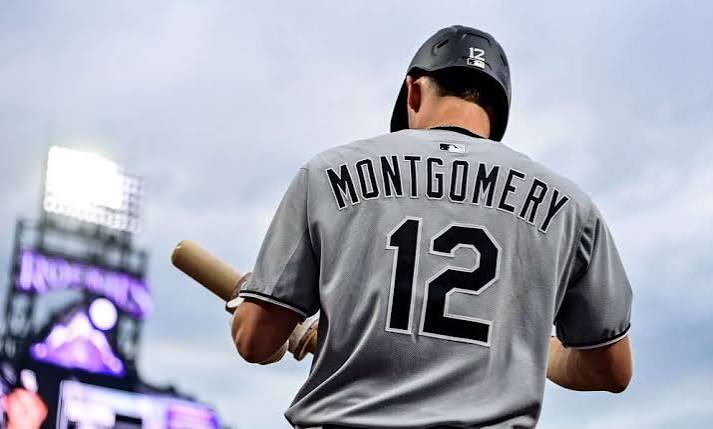
Colson Montgomery Is Doing Something Special
If you haven’t been paying attention to Colson Montgomery, now is the time to start.
The 22-year-old shortstop made his major league debut on July 4, 2025, exactly one year before hitting a go-ahead homer in the eighth inning to help the White Sox beat the Guardians 3-1 on July 4 of this year. In 155 games since that debut, Montgomery has hit 43 home runs. He currently leads all shortstops in baseball with 22 on the season. Since the 2025 All-Star break, he ranks third in the majors in home runs and fifth in RBI.
He is 22 years old. He plays shortstop. He is doing this.
Manager Will Venable was asked this week what Montgomery’s ceiling looks like. “Just more contact,” Venable said. “He’s such a good hitter and obviously has so much power, just tap into that more consistently. It’s almost tough to say that because of how successful he has been, but he’s that good that he leaves you thinking that there’s another level to what he can do out there.”
A manager saying his young star can reach another level while the player is already doing this is either coach-speak or a genuinely frightening statement about what’s coming. Based on what Montgomery has shown so far, I’m inclined to believe it’s the latter.
The Supporting Cast Is Real
Montgomery isn’t carrying this alone, which is what makes the White Sox so interesting.
Miguel Vargas just made his first All-Star selection after a breakout season at the heart of the lineup. South Side Showdown noted the White Sox are averaging 4.61 runs per game, good for tenth in baseball, and they’ve been doing it without Murakami since May 29. Kyle Teel returned from injury on June 22 and has hit in eight of his eleven games back, giving the lineup another dimension it was missing. Rookies Braden Montgomery, Sam Antonacci, and Tristan Peters have all stepped up in meaningful moments.
And then there is Murakami. The Japanese slugger who hit 246 home runs in 892 career games in the NPB and earned multiple MVP awards is currently on a minor league rehab assignment with Triple-A Charlotte. When he returns, it will be the first time all season the White Sox have had their full lineup intact. A team leading the division by one game, averaging nearly five runs a game, without its best hitter.
Think about that.
Will Venable Deserves Real Credit
This doesn’t happen without the right manager, and Will Venable has been the right manager for this moment.
Venable took over on October 31, 2024, his first MLB managerial job. He inherited a roster coming off a historic losing season and turned them into a 19-win improvement in year one, then brought them back with genuine division title aspirations in year two. Multiple White Sox players have said publicly that 2026 is the most fun they’ve had playing baseball. That doesn’t happen by accident. That’s a manager who has created a clubhouse culture where young players believe in themselves and in each other.
South Side Showdown, in their midseason grades, praised Venable’s clubhouse management while noting his in-game decisions still have rough edges from time to time. That’s a fair and honest assessment of a second-year manager still learning on the job. But what he has built in that clubhouse, the belief, the energy, the willingness to compete every night regardless of what this franchise has been through, is something that should not be overlooked when the AL Manager of the Year conversation gets serious this fall.
He took a team that went 39-121 two years ago and has them in first place in July. Whatever his in-game flaws, the case for Will Venable is a compelling one.
What the Guardians Series Told Us
The four-game series in Cleveland this past weekend was as close to a barometer as we’ve had in the AL Central this season. The Guardians won the first two on walk-off hits. The White Sox won the last two, including a gritty 7-6 win on Sunday that required navigating a rain delay of nearly an hour and a half. Chicago split the series, retook the division lead, and left Progressive Field with a one-game advantage and 73 games to play.
As a Guardians fan, the series was tough to watch for obvious reasons. But I’d be lying if I said I wasn’t impressed by how the White Sox responded after two walk-off losses to open the series. A lesser team, a team still figuring out how to win, folds there. They didn’t fold. They came back the next two days and won both games.
That’s what good teams do.
So Where Does This Go?
Here’s my honest take as someone who wants the Guardians to win this division and will be rooting for them every step of the way.
I don’t see the White Sox going deep into the playoffs this year. This is a young team still learning what October baseball looks like, and the experience gap in a short series against a team like the Yankees or Astros is real. The rotation, which South Side Showdown graded as the clear weakness of the team, will be tested in ways it hasn’t been yet when the schedule gets harder.
But I also didn’t see the White Sox leading the AL Central in July after going 39-121 two years ago. So maybe I should be more careful about what I say they can’t do.
What I know for certain is this. The Guardians need to handle their business in the second half or they won’t get the chance to find out. The White Sox aren’t waiting around. They aren’t playing for next year. They’re playing for right now.
And honestly? If the Guardians don’t make it to October, I might just find myself rooting for the South Side. I never thought I’d write that sentence. But this White Sox team has earned it.