What Happened to the Boston Red Sox?
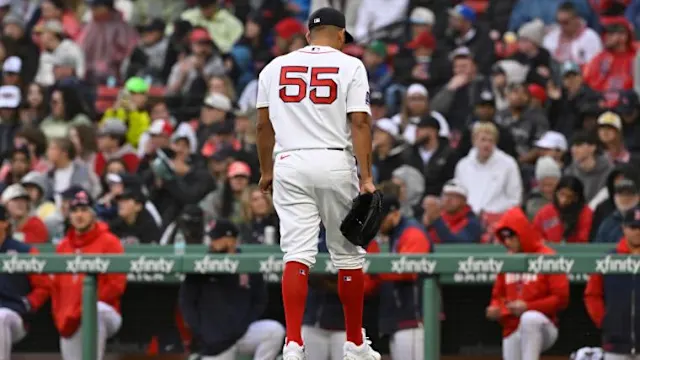
Not that long ago, the Boston Red Sox were one of the best teams in baseball. They won the World Series in 2018 with a 108-win season, one of the best in recent MLB history. The rivalry with the Yankees was electric. Fenway Park was loud, relevant, and full.
Now they’re sitting near the bottom of the American League with one of the worst records in baseball, on their way to what could be a third last-place finish in five years. And the more you dig into how this happened, the more you realize it didn’t happen overnight. This has been building for a while.
Let’s start with the players who are gone, because that’s really where this story begins.
Mookie Betts was traded to the Dodgers in 2020 for what most people considered a bad return. Xander Bogaerts left in free agency after 2022. Then last year, the Red Sox traded Rafael Devers, a three-time All-Star and one of the most beloved players in the organization, to the San Francisco Giants. The deal got $250 million in remaining contract off the books, and returned Kyle Harrison, Jordan Hicks, and a couple of minor leaguers.
The Devers trade was messy even before it happened. Boston signed Alex Bregman to play third base, which pushed Devers to designated hitter. When Triston Casas got hurt, the team asked Devers to play first base. He refused. The relationship fractured, the front office ran out of patience, and Devers was gone before the trade deadline.
Here’s the problem. Bregman lasted one year and left. Devers is now someone else’s headache. And Boston is left with a lineup that has no real power, no clear identity, and no obvious answer to the question of who is supposed to drive in runs.
The front office tried to address it this offseason. They brought in Sonny Gray and Ranger Suarez to strengthen the rotation. They already had ace Garrett Crochet coming off a promising first season in Boston. On paper, the pitching was supposed to carry this team.
Then the season started, and everything fell apart at once.
Crochet’s ERA was nearly 8.00 through his first five starts. Brayan Bello’s was 9.00. Sonny Gray was on the injured list with a hamstring strain. The lineup had a below-average wRC+ of 84, ranked 28th in the league. Roman Anthony, the highly touted young outfielder who had shown so much promise, got off to a slow start and then hurt his hand in May, revealing what appeared to be a partial ligament tear. Marcelo Mayer, Trevor Story, Ceddanne Rafaela, and Jarren Duran all struggled.
The team started 2-8. A franchise record for losses by the end of April followed.
On April 25, the Red Sox fired manager Alex Cora and five members of his coaching staff, hours after a 17-1 blowout win over the Orioles. The timing was jarring. Cora had won a World Series with this organization. His managerial record was 620-541. And they let him go the morning after one of the biggest wins of the season.
Interim manager Chad Tracy took over, and things didn’t improve. Boston fell to 0-32 in games where they trailed by three or more runs. That’s not just bad. That’s a culture problem.
Here’s a strange but telling statistic that a Yardbarker analysis recently surfaced: Boston leads all of Major League Baseball in ninth inning runs scored. But through mid-June, they had zero wins when trailing after eight innings. Zero. They keep scoring when the game is already decided, and going quiet when it matters most. That’s not bad luck. That’s a team that has checked out.
The dysfunction goes deeper than the field, too. Red Sox CEO Sam Kennedy called the season “embarrassing and unacceptable” on a Boston radio show in June. David Ortiz, a special advisor to the team, said publicly that owner John Henry is worried. The Boston Globe reported that minority owner Theo Epstein has been disappointed by the organization’s overly analytical direction under chief baseball officer Craig Breslow, a direction that Epstein feels has come at the expense of fundamentals and common sense roster construction.
Reports surfaced that virtually everyone around the league believes Breslow is the next to go.
The team also leads baseball in errors this season, which speaks to the same development philosophy problem. When your front office prioritizes swing data over basic defensive fundamentals, it eventually shows up in the standings.
So how did we get here? The honest answer is a combination of things. Payroll decisions that stripped the roster of its best players without replacing them adequately. A front office philosophy that prioritized projections over proven talent. A manager and a chief baseball officer who were never quite on the same page about whether to build or compete. And a run of injuries this year to the very players they were counting on most.
There’s still real talent here. Roman Anthony is a legitimate future star once he’s healthy. Marcelo Mayer has the tools to be a cornerstone. Garrett Crochet, when right, is a genuine ace. The bones of something are there.
But this year is already being written off by most people covering the team, including members of the organization itself. The conversations in Boston right now aren’t about making a playoff push. They’re about who gets traded at the deadline, who gets fired from the front office, and whether next year can look anything like what this team was supposed to be.
For a franchise that was one of the best teams in baseball not that long ago, that’s a painful place to be.