UFC Freedom 250 Was a Spectacle. Was It Worth the Risk?
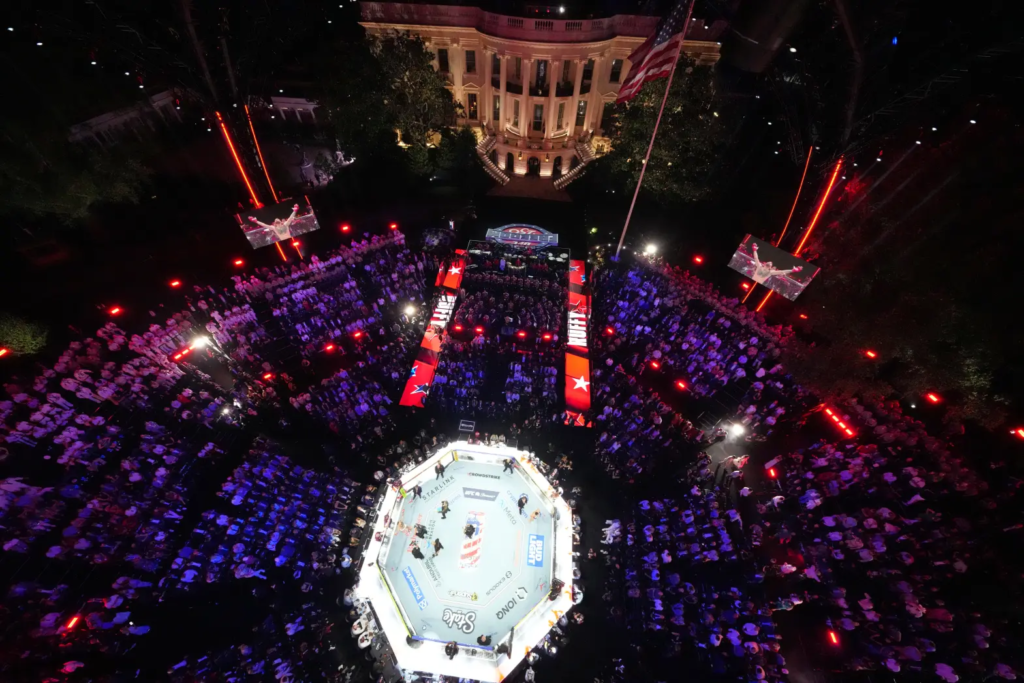
I’ll say this upfront. I didn’t watch UFC Freedom 250. Not a single second of it. And the more I’ve dug into what actually happened around this event, the more comfortable I am with that decision.
Let me be clear about something before I go any further. I have nothing against the UFC as a sport. The fighters who competed on June 14 on the South Lawn of the White House are legitimate world-class athletes who trained hard and performed professionally under genuinely unusual circumstances. This isn’t about them.
This is about the decision to hold this event at the White House in the first place, and whether anyone in a position of authority actually thought through what they were asking the American public, and the American security apparatus, to absorb.
Start with the numbers, because they tell you a lot. When President Trump first floated this idea at a rally in Iowa in July 2025, he was talking about 20,000 to 25,000 people on the White House grounds. By the time the event actually happened, that number had been reduced to just over 4,300 people on the South Lawn. Dana White himself confirmed publicly in September 2025, nine months before the event, that the dramatic reduction was due to security concerns. Think about that for a second. They cut attendance by more than 80 percent from the original vision because of what it would take to keep people safe.
And it still wasn’t enough to prevent a real threat from materializing. Four days after the event, FBI Director Kash Patel confirmed that federal law enforcement had foiled a genuine plot targeting UFC Freedom 250. A 19-year-old from Ohio named Tycen Proper was arrested and charged with attempted murder of a federal official and conspiracy, among other felonies. His own mother had contacted the Knox County Sheriff’s Office to report concerns about his behavior. Patel confirmed there were multiple suspects and multiple plots, not just one. Secret Service Director Sean Curran said his agency “worked around the clock” in the days leading up to the event to identify and stop those responsible.
The event was ultimately deemed safe, and I want to be fair about that. Law enforcement did its job. Nobody was hurt. But the question worth asking is whether we should have been in a position where the FBI needed to run a multistate operation to stop an attack on a sporting event held at the President’s residence, with the President himself sitting ringside.
Security experts had raised these exact concerns weeks before the event took place. A former Supervisory Special Agent in the United States Secret Service told one outlet that the risks at an outdoor, well-publicized event of this kind are extensive, ranging from drones to armed intruders to chemical or biological threats. The Secret Service designated UFC Freedom 250 a Special Event Assessment Rating 1 event, the same category as the Super Bowl. Seven separate government agencies were involved in coordinating security. Road closures and traffic restrictions affected major corridors across downtown Washington for days.
None of that is cheap. And while the White House insisted that UFC covered the $60 million production cost, the federal security and logistical operation surrounding this event remains unaccounted for publicly. Critics, including the watchdog group that filed a lawsuit to block the event, have called for a full accounting of what taxpayers actually spent keeping 4,300 South Lawn guests and over 100,000 Ellipse spectators safe that night.
There are also legitimate questions that have nothing to do with politics. The fights themselves nearly lost their official status entirely over a $100 permit. The District of Columbia Combat Sports Commission requires all promoters, regardless of size, to obtain that permit to have bouts officially sanctioned and counted on fighters’ professional records. The UFC refused to pay it, arguing that because the White House sits on federal land, local DC regulations don’t apply.
The commission chair, Andrew Huff, publicly warned this was dangerous precedent. “Every promoter in the District of Columbia should be, and is, held to the same standard, whether you’re putting on a small wrestling show or a major event,” he told the Washington Post. His concern was pointed: if the UFC can bypass local oversight by holding events on federal property, what stops any promoter from doing the same in a national park or on any other federal land, potentially staging bouts without proper medical oversight or fighter safety standards?
The UFC eventually resolved the situation by bringing in the Association of Boxing Commissions, a national body, to serve as an alternative sanctioning authority, and the ABC confirmed all six fights would count on official records. But the fact that a championship card at the White House nearly became a series of unrecognized, unsanctioned bouts over a $100 permit is a remarkable detail that got lost in the spectacle of the event itself.
Then there’s a pattern worth looking at collectively, because each piece on its own might seem minor, but together they paint a picture worth questioning. In March 2026, Trump purchased between $15,000 and $50,000 worth of stock in TKO Group Holdings, the publicly traded parent company of the UFC, just months before the event. Two days before the fight, a venture associated with the Trump family called World Liberty Financial was announced as a new sponsor, adding $250,000 to the bonus pool. The closed captioning during the broadcast on Paramount+ was sponsored by TrumpCoins.com, a promotional item tied to the president. None of these individually may rise to the level of a legal violation, but when you stack a presidential stock purchase in the host company alongside a family financial venture joining as a last-minute sponsor alongside a branded cryptocurrency product sponsoring the broadcast, it raises a question that’s fair to ask: where exactly does the sporting event end and the financial opportunity begin?
A Reuters/Ipsos poll conducted before the event found that only 16 percent of American adults believed it was appropriate to hold MMA fights on the White House lawn. Even among Republicans, only 31 percent said it was appropriate.
In the end, Dana White himself may have delivered the most honest verdict on the whole thing. When asked after the event whether the UFC would ever do this again, White said simply that he can’t afford it, citing the $60 million price tag, the logistical challenges of building a venue on a federal landmark, and the weather uncertainty of an outdoor show in June. Once in a lifetime, he said.
I’ll take him at his word on that. Once was more than enough.