The WNBA Has a Referee Problem, and Everyone Knows It
I want to be upfront about something before I get into this. I genuinely love watching WNBA basketball. The style of play, the fundamentals, the team-first approach, in a lot of ways it’s a better basketball product than what you see in the NBA on a nightly basis.
But the officiating makes it genuinely hard to watch some nights, and I’m not alone in saying that.
Let’s start with what happened Monday night, because it’s the perfect illustration of everything that’s wrong with how this league handles its officials.
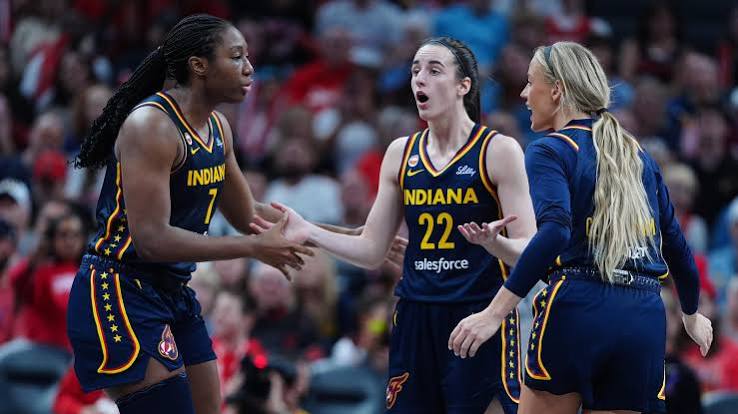
Caitlin Clark was assessed a technical foul during the Indiana Fever’s 86-77 win over the Phoenix Mercury. Her offense? Clapping. Not screaming at a referee. Not throwing equipment. Clapping her hands after being called for a personal foul.
Clark confirmed it herself in the postgame press conference. She said she asked referee Gerda Gatling directly why she received the technical. Gatling told her it was for clapping.
“It’s ridiculous,” Clark told reporters. “I got a technical for clapping. We should all just go on the calendar now and pick a game I’m going to be suspended for if I’m going to get technicals for clapping.”
That’s not an overreaction. That’s a completely rational response to an irrational call.
Here’s the context that makes it worse. The sequence involved Clark, DeWanna Bonner, Alyssa Thomas, and Sophie Cunningham all getting caught up in a physical exchange in the paint. Multiple technical fouls were handed out. Myisha Hines-Allen received a second technical and was ejected. Clark’s own coach, Stephanie White, said after the game, “They said that Caitlin got it for clapping, so I guess that’s taunting.”
Clark pushed further. “I’d love to hear what they say of the reasoning of why I got the technical foul in that situation and why other players on their team didn’t get a technical foul. If anything, split it. Okay, fine, everybody gets a technical foul. That wasn’t how they were handed out.”
She’s right. And the fact that she’s now sitting on five technical fouls, three away from an automatic one-game suspension, for the kind of competitive intensity that every great player in every sport shows, is a real problem.
There is an exact precedent for this specific situation. Paige Bueckers received a technical foul for clapping against Atlanta on May 22. The WNBA rescinded it within 48 hours. If the league is consistent, Clark’s technical should meet the same fate. If it doesn’t, that inconsistency is its own story.
And inconsistency is really what this entire conversation comes down to.
The WNBA spent all of last offseason acknowledging the officiating problem was real. Commissioner Cathy Engelbert said publicly during All-Star Weekend in July 2025 that the league heard the concerns. She talked about hours spent reviewing plays and working on official development. A dedicated officiating task force was formed, separate from the normal competition committee, including head coaches Stephanie White, Cheryl Reeve, and Becky Hammon. Officials were put on grading systems. Performance was tied to playoff assignments.
The result deserves some unpacking, because the raw numbers alone don’t tell the whole story.
The 2026 season opened with 22.3 fouls and 23.1 free throws per game, up sharply from 17.5 fouls and 18.2 free throws the year before. In just the first 11 games, five featured a team attempting at least 25 free throws. There were only 25 such games in all of 2025.
On the surface, more fouls called sounds like exactly what you’d want if physicality was the problem. If players were getting away with too much contact, cracking down should mean more whistles. That logic makes sense.
But that’s not what Reeve and the other coaches were asking for. The task force specifically discussed targeting unnecessary physicality, the dangerous, flagrant, or deliberately dirty contact that was making the game unsafe and unwatchable. What they got instead was officials calling marginal fouls, the kind of incidental contact that happens on every possession in every basketball game at every level. Ticky-tack calls that stop the game, disrupt the flow, and drain the fun out of what is, at its best, a genuinely beautiful brand of basketball.
Reeve put it exactly right. “We talked about unnecessary physicality. We didn’t say we want to call marginal fouls. We never brought that up.”
There’s a real difference between protecting players from dangerous contact and whistling every bump and nudge in the paint. The WNBA was asked to do the first thing and appears to have done the second. And the result is a game that plays slower, feels more frustrating to watch, and still hasn’t solved the underlying problem of inconsistency from crew to crew and game to game.
Cheryl Reeve is no stranger to the fine system. She was hit with the largest fine in league history after blasting officials following last year’s playoff loss, calling the officiating crew “f—ing malpractice” in her postgame press conference. Breanna Stewart called the lack of flow “insane” after one Liberty game stretched nearly three hours. Kelsey Plum talked about driving more than anyone in the league, shooting six free throws, and having scratches on her face and body with nothing called.
Natasha Cloud spoke to ESPN, saying she didn’t want to get fined just for answering their question about officiating. “I work my f—ing ass off all offseason for these four and a half months to try to win a championship,” Cloud said. “And if I feel like they’re having too much impact on the game, it shouldn’t be.”
Sophie Cunningham was fined three separate times in just a couple of months for criticizing officials. A thousand-dollar fine for White and Hammon each, just for publicly supporting Reeve after her playoff ejection. The fines and suspensions are designed to protect the officials. What they’ve actually done is make the players and coaches angrier and more vocal, because the underlying problem keeps being there the next game.
There’s also a structural problem that doesn’t get talked about enough. The WNBA lacks a centralized replay center. It doesn’t have a developmental league to train and develop officials the way other leagues do. It rotates crew combinations from game to game, which means officials are constantly working with different partners and never building the kind of group cohesion that leads to consistent decision-making.
David Hancock, a professor who studies the psychology of sports officiating, put it directly. “When you don’t have group cohesion, you don’t have the same level of trust in your partners. When referees felt more connected to their group, they also felt they performed better.”
That’s not a critique of individual referees. That’s a systemic failure.
The league is entering a $2.2 billion, 11-year media deal with Disney, Amazon, and NBCUniversal, each of which will air more than 125 games per year. The WNBA is going to be on more screens, in more living rooms, and in front of more casual fans than ever before.
New fans tuning in to watch Caitlin Clark and Paige Bueckers and Breanna Stewart do not need the first thing they see to be a technical foul for clapping.
The players are the product. The basketball is the product. Right now, the officiating is undermining both. And fining everyone who says so out loud isn’t going to fix it.
At some point, the league has to hold the officials to the same standard it holds everyone else. That’s not asking too much. It’s asking for the minimum.