What Is Wrong With Costa Rica?
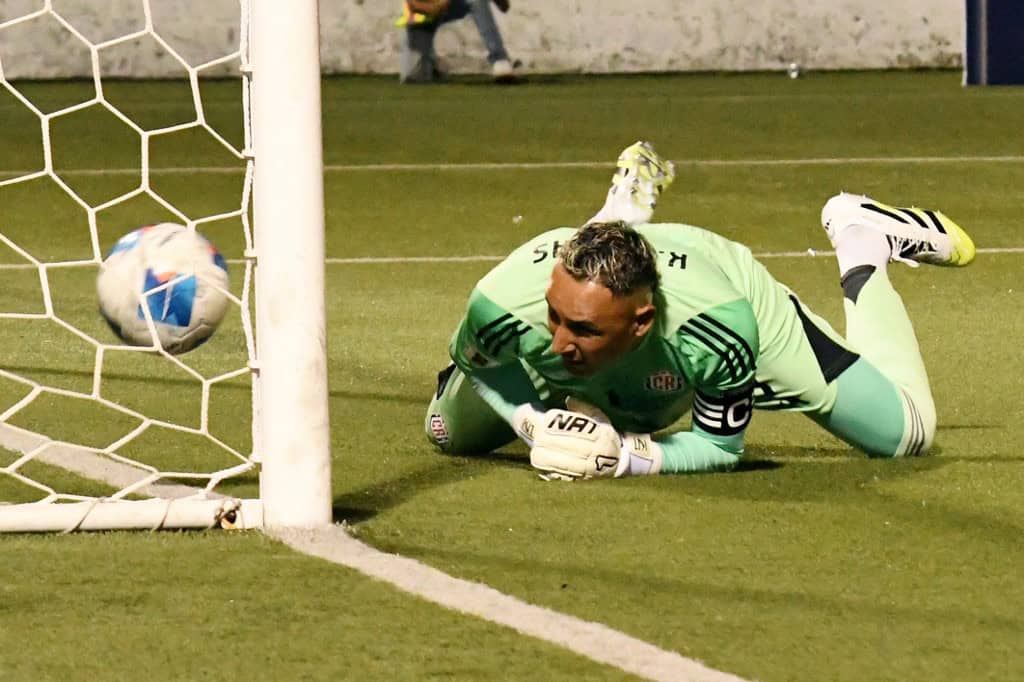
I want to start with a number that still doesn’t feel real to me. Costa Rica drew Nicaragua during World Cup qualifying. Nicaragua. A country that’s better known for baseball, that fielded a team that scored a tying goal late in the match while playing a man down after a red card. That draw, on its own, should have been the moment everyone in Costa Rica’s federation realized something was seriously wrong.
It wasn’t the only warning sign. In another qualifier, Costa Rica blew a two-goal lead at home against Haiti in the second half, needing extra time just to scrape out a 3-3 draw. Haiti, by the way, is a country dealing with such instability that it couldn’t even host its own home matches, instead playing them in Curaçao of all places. And Haiti still finished ahead of Costa Rica in the group. So did Honduras. Costa Rica finished third with seven points from six matches and a grand total of one win. One. Against a group that featured Haiti, Honduras, and Nicaragua, a group that on paper should have been a near-formality for a country with Costa Rica’s soccer pedigree.
This is the part that’s been eating at me. This isn’t ancient history we’re talking about. A decade ago, Costa Rica went to Brazil and shocked the entire world, winning a group that included Italy, Uruguay, and England, then beating Greece in penalties before finally falling to the Netherlands in the quarterfinals. That Costa Rica team played with confidence, with identity, with the sense that they belonged on the same field as soccer royalty. This Costa Rica team couldn’t get past Nicaragua and Haiti.
So what happened? From what I can tell digging into this, it’s not one single failure, it’s a slow accumulation of them. The golden generation that carried that 2014 run, guys like Keylor Navas and Joel Campbell, simply got old, and the federation never built a real pipeline behind them. Critics have pointed to coach Miguel Herrera leaning too heavily on aging veterans from that 2014 cycle instead of trusting younger talent to develop through real international minutes. When you do that for too long, you don’t get a transition, you get a cliff. And Costa Rica just went off it.
There’s also something bigger happening in the region that I think deserves more attention than it’s gotten. CONCACAF isn’t the soft confederation it used to be. Countries that Costa Rica used to routinely beat are no longer pushovers, and nowhere is that more obvious than with Curaçao.
Here’s a country with a population of around 150,000 people, smaller than a lot of American suburbs, that just became the smallest nation in World Cup history to qualify. They did it with a roster built almost entirely of Dutch-born players of Curaçaoan descent, guys who grew up in places like Amsterdam and Rotterdam and chose to represent their family’s island instead of chasing a long-shot spot with the Netherlands. It’s a smart, deliberate strategy, built over years, led by a 78-year-old Dutch manager who once took the Netherlands itself to a World Cup quarterfinal. They went unbeaten through qualifying. Unbeaten. Costa Rica, a country that actually lives and breathes this sport at every level of its culture, finished behind a team that had to recruit half its roster from another continent’s diaspora just to field a squad.
That’s not a knock on Curaçao, by the way. What they pulled off is genuinely impressive and a great story for this tournament. It’s more of an indictment of Costa Rica that a nation with infinitely more soccer infrastructure, history, and passion couldn’t out-organize a 150,000-person island that had never qualified for anything in its existence.
I keep coming back to the word complacency, because that’s what this smells like from the outside. Costa Rica had qualified for three straight World Cups before this. There was probably a sense, conscious or not, that qualifying was just what Costa Rica does, that the position was earned permanently rather than something you have to keep re-winning every single cycle. CONCACAF didn’t get the memo. Panama has been building steadily and now dominates head-to-head matchups that used to go the other way. Honduras outscored everyone in that group. The whole region simply caught up while Costa Rica was still coasting on a decade-old reputation.
So can they fix it? I think they can, but only if the federation actually treats this as the wake-up call it clearly is rather than a fluke. The encouraging signs are already sitting right there if anyone wants to use them. Younger players like Manfred Ugalde and Brandon Aguilera represent a real chance at a new core, if the federation actually commits to building around them instead of reaching for one more aging veteran the next time things get tight. There’s also reportedly a push toward stability at the coaching level, hiring someone who’ll actually be given a full four-year cycle instead of being scapegoated the moment results dip.
What worries me is whether Costa Rica’s soccer culture, as passionate as it is, can stomach the patience this rebuild actually requires. It’s one thing to talk about youth development. It’s another to sit through a rough Nations League cycle or an ugly friendly loss without the public and the federation both panicking and reaching backward again. The 2014 generation was a gift, not a permanent state of being, and Costa Rica is going to have to prove it understands the difference before 2030 rolls around.
For now, though, the World Cup is happening without them, for only the second time this century. That’s a strange, uncomfortable sentence to write about a country this in love with the sport. I hope it’s the kind of failure that actually forces change, rather than the kind that gets explained away the moment everyone moves on to the next cycle.