Why I Stopped Watching AEW
I want to be upfront about something before I get into this: I’m not writing this as a “AEW bad, WWE good” hit piece, and I’m not even fully done with AEW. I still catch clips on YouTube here and there, partly out of habit and partly because some small part of me keeps checking to see if things have changed. They haven’t, not really. And that’s the problem.
I have two kids. Like most parents, my TV time isn’t really my time anymore. It’s shared space, and at any moment one of them could wander into the living room while I’m watching something. That’s not a hypothetical for me, it’s just Tuesday. So when I sit down to watch wrestling, I’m not just thinking about whether the matches are good. I’m thinking about whether I need to be ready to grab the remote.
With AEW, I need to be ready a lot.
This isn’t a new criticism, and I know that. People have been talking about AEW’s reliance on blood since practically the start of the company. Kevin Nash made waves a while back when he said the constant blood and spotfests were boxing AEW into a niche audience, making it harder to grow. I didn’t agree with him at the time. I liked that AEW felt more dangerous, more real, less like a polished product and more like an actual fight. That was part of the appeal early on.
But “more real” and “more violent” started blurring together, and at some point the blood stopped being the exception and started being the expectation. The Blood & Guts matches are basically built around it now. When AEW ran the first-ever women’s Blood & Guts match, the wrestling itself got plenty of praise, but it also reignited the whole conversation about how much blood is too much. Kris Statlander pushed back hard on the criticism, essentially saying viewers don’t have to watch if they don’t like it. Fair point, in theory. In practice, my five-year-old doesn’t read content warnings before walking into the living room.
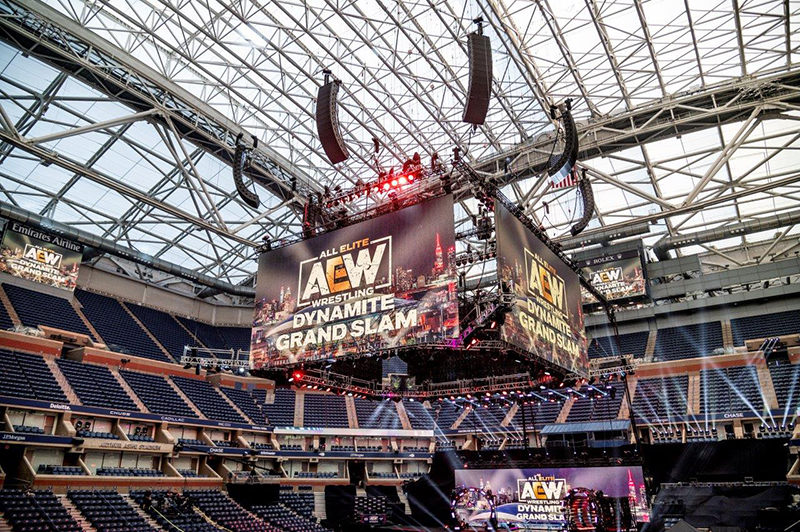
Here’s the thing that actually got my attention: even outside commissions weren’t comfortable with it. When AEW ran Double or Nothing in New York, the state athletic commission reportedly restricted intentional bloodshed and crowd brawling for the event, including the Stadium Stampede match, which has historically been one of AEW’s most chaotic, blood-spattered showcases. If a state athletic commission is stepping in to say “not like this, not here,” that’s a pretty strong signal that this isn’t just dads like me being overly sensitive. There’s a real safety and presentation conversation happening at an official level, not just in wrestling forums.
I’ll give AEW credit where it’s due. AJ Styles, who’s worked both sides of this industry, said recently that he understands there’s a time and place for blood in a storyline. I don’t disagree with that either. The problem isn’t that blood exists in wrestling. It’s that AEW has built so much of its identity around it that I can’t predict which Wednesday or Saturday night is going to be the “in your face” one and which one is going to be safe to have on with my kids in the room. WWE, whatever else you want to say about its product, made a business decision years ago to be predictably PG. I always rolled my eyes at how sanitized that felt. Now I understand exactly why some parents valued it.
So here’s where I’ve landed, at least for now. I’m not boycotting AEW. I’m not telling anyone else they shouldn’t watch it. The in-ring work is still some of the best in the industry, and I respect the hell out of what these performers do. But I can’t have it on live in my house anymore, not without basically standing guard over the remote the entire show. That’s not a sustainable way to watch wrestling as a parent, so I’ve quietly stepped back to YouTube highlights I can watch on my own time, on my own terms, after the kids are in bed.
I keep hoping AEW finds a way to have it both ways, the intensity that makes it special without making it a show I have to hide from my own children. Until then, I’ll be checking in from the sidelines, watching the clips, and wondering if this is the year it changes.