The NFL Shut the Door on Sorsby. Now the Hard Decisions Start.
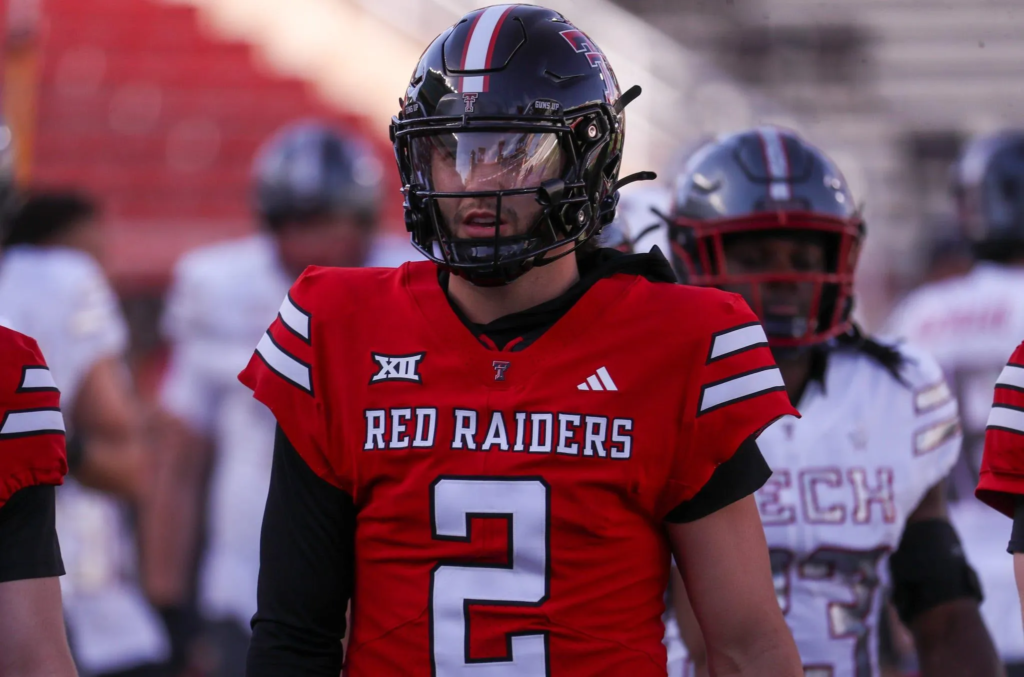
We covered the Brendan Sorsby situation a few weeks ago. At the time, there was still a path forward. The supplemental draft felt like a legitimate option, and the argument for a team using a third-round pick on a quarterback with his upside wasn’t a hard one to make.
The NFL just shut that door.
On June 23, the league announced it would not hold a 2026 supplemental draft. NFL Management Council general counsel Larry Ferazani sent a letter to Sorsby and all 32 teams making it official. Sorsby was the only player who had applied.
Why Did the NFL Do This?
The league’s letter didn’t mince words.
It hammered Sorsby on multiple fronts. His application was filed just three business days before the June 22 deadline. It came with no supporting documentation, no records from the NCAA investigation, and no meaningful explanation of the conduct that got him banned from college football in the first place.
The NFL also went after the sequence of events leading up to the application. The letter noted that Sorsby spent months fighting the NCAA in court rather than accepting responsibility, then only turned to the NFL after that litigation fell apart. The letter called his conduct a matter tied to the league’s “core integrity interests” and said it didn’t demonstrate whether Sorsby would even adhere to NFL rules on competition integrity going forward.
An NFL source told ESPN bluntly that the application carried “core of the game integrity issues.”
Pro Football Talk’s Mike Florio called the league’s reasoning a cop-out. His point is straightforward. There is no NFL eligibility rule that bars a player from being drafted based on gambling that happened before entering the league. The NFL knew Sorsby might apply as early as late April. They had time to investigate and chose not to. Florio’s take is that someone decided Sorsby deserved to miss a year of football, and cancelling the supplemental draft was the cleanest way to accomplish that.
Is This a CBA Violation?
This is where it gets complicated, and it’s worth being honest that nobody outside the negotiating rooms has a definitive answer yet.
Sorsby’s attorney Jeffrey Kessler, a longtime outside counsel to the NFLPA who has spent decades challenging sports leagues, told ESPN the decision “is a violation of the CBA and the law” and said he would pursue the matter with the NFLPA immediately.
Kessler’s procedural argument has some substance. Sorsby’s camp contacted the NFL about the supplemental draft process in late April. They were told a simple application was all that was required before the June 22 deadline. Sorsby submitted the application within hours of receiving it. His agent then asked the NFL whether any additional materials were needed. The NFL said no. The league then denied him partly on the grounds that his application lacked additional materials.
That is a legitimate procedural inconsistency worth scrutinizing.
The NFLPA’s Silence Speaks Volumes
After Kessler made his statement, all eyes turned to the NFLPA. So far, the union has said nothing meaningful.
A source told ESPN that the players’ association has not made any determination on whether there are legal grounds to act. And part of what makes this complicated is the question of whether Sorsby is even a union member to begin with. He hasn’t been drafted. He hasn’t signed as an undrafted free agent. He has no formal standing in the NFL yet, which means his membership in the NFLPA is genuinely uncertain.
That uncertainty cuts both ways.
On one hand, if Sorsby tries to push a CBA grievance through the NFLPA, the fact that he isn’t a member creates a real problem for that argument. The union has standing to challenge the NFL on his behalf, but it would be fighting for someone who isn’t part of the bargaining unit.
On the other hand, there’s another wrinkle NBC Sports pointed out. If Sorsby gets a roster spot, a current union member loses theirs. The NFLPA representing active players has a built-in reason to stay on the sidelines when the fight involves getting a non-member onto a roster at someone else’s expense. The silence may have less to do with legal strategy and more to do with that very real conflict of interest.
Can He Sue the NFL Directly?
Yes, he can try. But it’s a harder road than it might look.
According to Sportico’s legal analysis, Sorsby could file an independent lawsuit against the NFL outside of the NFLPA grievance process. However, there is a significant legal obstacle already sitting in his way. A case called Maurice Clarett v. NFL established precedent on this exact type of challenge. Clarett was an Ohio State running back who tried to enter the NFL before meeting its eligibility requirements and challenged the league’s rules in court. The U.S. Court of Appeals for the Second Circuit ruled in the NFL’s favor.
Here’s the twist. Jeffrey Kessler was Clarett’s attorney in that case. He lost.
Sorsby’s side could argue he shouldn’t be bound by a CBA negotiated by a union he wasn’t a member of. Kessler tried that same argument in Clarett. The court rejected it. And in that case, the NFLPA actually filed a brief effectively working against Clarett, framing him as an outsider to the labor agreement.
History could easily repeat itself here.
Can He Still Play in College?
No. That door is closed too, and this is the part that got lost in some of the coverage.
Sorsby had a temporary injunction from a Texas judge that would have allowed him to play for Texas Tech in 2026. But when he decided to pursue the supplemental draft, his attorneys filed a motion to dismiss that lawsuit with prejudice. That killed the injunction. According to ESPN, he is now permanently ineligible under NCAA rules. He made himself ineligible on purpose in order to qualify for the supplemental draft, and now both options are gone.
What Are His Options Now?
Limited. The CFL season was already underway when the NFL made its announcement. The United Football League doesn’t start again until next spring. A non-NCAA college program is a theoretical option, but that represents a dramatic step down for a player of his caliber.
The NFL’s letter told Sorsby directly to prepare for the 2027 NFL Draft. ESPN’s Ben Solak, who rated Sorsby as a developmental third-round prospect based on his Cincinnati film, noted that sitting out a full year doesn’t help that grade. The 2027 QB class is shaping up to be deeper than 2026 was, with Arch Manning, Dante Moore, and others in the mix. Sorsby will be older, without recent game film, and competing in a stronger class.
Here’s the Part Worth Thinking About
Kessler is already signaling a legal fight. And look, there may be a legitimate argument buried in there about how the NFL handled the application process.
But here’s what I keep coming back to.
Brendan Sorsby needs to think very carefully about how he plays this.
The NFL is not a league with a short memory when it comes to people who challenge it publicly. We’ve seen this play out in different ways over the years. Colin Kaepernick became one of the most well-known cautionary tales in modern sports history about what can happen to a player when the league decides it doesn’t want to deal with the headache, whatever the stated reason. Shedeur Sanders fell to the fifth round in the 2025 NFL Draft, and most of the discussion centered on his personality and his father’s outspoken nature. Teams didn’t have to write anything official. It was just quietly there in the background when it came time to make decisions.
Now think about what it looks like to be the quarterback who fought the NCAA in court, then fought the NFL in court, forced his way into a supplemental draft through legal action, and is now asking 32 franchise owners to spend a meaningful draft pick on him.
Even if Sorsby wins the legal argument, winning in a courtroom and winning in an NFL draft room are two entirely different things. No rule says a team has to draft you. No rule says a general manager has to return your agent’s calls.
It doesn’t mean challenging the NFL is wrong. If the CBA was applied unfairly, he has every right to pursue it.
But someone in Sorsby’s corner needs to be having a very honest conversation with him about the full picture. The 2027 draft is less than a year away. Showing accountability, staying in shape, and arriving in April with his head down and his football doing the talking might be the smarter long game than winning a legal battle that makes every team in the league quietly wonder if this is the kind of situation they want in their building.
The NFL shut the door in 2026. How Sorsby responds to that may end up being the most important decision of his career.